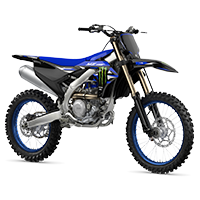
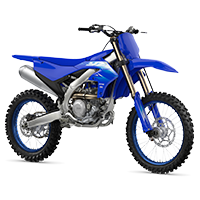








Six Months In: What We Learned About the R9
One ordinary Tuesday on a YZF-R9, six months into owning it, which is the only review that ever really counts / Aug 31, 2026 /
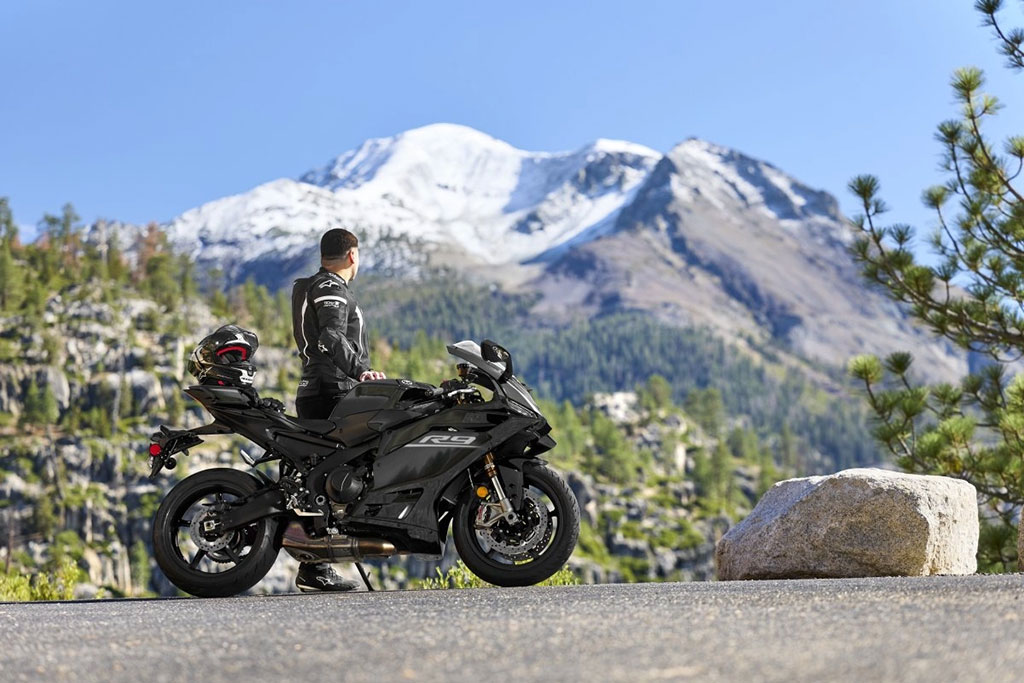
Six twenty in the morning and the garage is cold enough to see your breath.
Thumb the starter. The triple catches on the first crank, settles into the signature offbeat idle only a triple makes. Gloves on while it warms. This, the fortieth or the fiftieth morning of exactly this, is the whole point of what follows.
Because the ride an owner remembers six months into a YZF-R9 is not the first one. It's this one. A Tuesday. Nothing special about it.
Every launch review of this motorcycle was written over two days at a racetrack. Those reviews were accurate, and they had also been working with two days. For a Tuesday in October, two days cannot account.
Out of the driveway in second gear. First demonstration of the morning: why this bike works as transport.
The CP3 pulls cleanly from low revs, which sounds like a specification and has functioned as a quality-of-life feature. At walking pace, the clutch can stay out. Riders and reviewers, consistent on all of it. One trait worth knowing in advance: an emissions-related restriction in second gear around six thousand rpm. Most owners ride around it without much thought, or resolve it with an ECU flash.
Past that, the engine simply works, because Yamaha gave the R9 its own ECU tune and taller final gearing than the MT-09 runs, 16/43 against 16/45. On paper that is a footnote. On a Tuesday it is the difference between a bike that surges and a bike that drives.
Seven fifteen. The fuel light: something to plan around, not react to.
Three point seven gallons, against Yamaha's combined estimate of forty-eight miles per gallon. Over a hundred thirty miles of mixed freeway and canyon riding, RevZilla recorded roughly forty-three, and owners who have been running the same engine in the MT-09 log low fifties on relaxed highway work. Call the working number a hundred fifty to a hundred seventy-five miles between fills.
That becomes a stop about every two hours, which happens to be about as long as anybody has ever wanted to sit on a supersport before standing up. The constraint and the comfort have been arriving together. By the third long ride the fuel stops have quit feeling like interruptions and have started setting the rhythm of the day. Coffee at the second one.
Eight thirty. Bike parked. And here is the part of ownership that never appears in a review, because reviews end before the second oil change.
On the US schedule, oil comes every four thousand miles, with the first service at six hundred. Spark plugs arrive at twelve thousand, the air filter element at twenty-four thousand, brake fluid every two years and coolant every three. Premium fuel, ninety-one octane or better. At roughly twenty-six thousand six hundred miles, among the longest intervals in the class, sits the valve inspection.
The chain, every few hundred miles, wants checking. Beyond that, ride it.
None of that schedule is an accident. The CP3 three-cylinder lineage dates to the first MT-09 in 2013, which used an 847cc version, and the current 889cc generation arrived for 2021 with new pistons, rods, crankshaft, camshaft and crankcase. The same engine powers the MT-09, the XSR900 and the Tracer 9. So what an R9 owner has bought into is a decade of production knowledge, a deep parts supply, and dealers who already know the motor. At month six, that is worth more than any number on a dyno chart.
Five forty in the afternoon, and this is where the six months actually pays out.
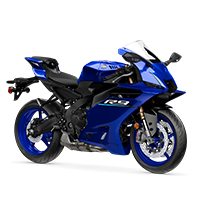
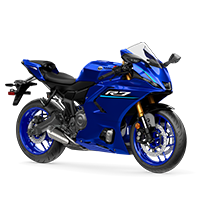
The light has gone long and gold, the commute is over, and instead of the bike going away it takes the long route home. Four hundred thirty pounds wet. The lightest Deltabox aluminum frame that Yamaha has ever put under a supersport. KYB front and rear, fully adjustable. Brembo Stylema calipers on 320mm discs that have needed one finger. A six-axis IMU, derived from the R1, runs nine-mode traction control, slide control, lift control and launch control underneath everything you do.
You won't notice any of it. That's the compliment.
Peak output, per Yamaha Europe: 119 PS, about 117 horsepower. On a road like this, genuinely irrelevant. The span between four and seven thousand rpm, where the triple pulls. Third gear, half a dozen corners, lever untouched.
Somewhere past the second set of bends comes the realization that the motorcycle, for twenty minutes, has not been thought about. That, for a supersport, is a harder thing to earn than any lap time.
Pull over at the top. Switch it off.
After a triple has gone silent there is a specific quiet, different from a twin and completely different from a four, and part of the purchase is that thirty seconds in a cold parking area with the engine ticking as it cools. Yamaha built pianos before it built motorcycles. Some evenings you can hear it.
And while those six months were happening, the R9, on the other side of the world, was having a season that answered any question about what sits underneath.
Stefano Manzi won the 2025 World Supersport championship for Pata Yamaha Ten Kate Racing, having taken the R9's first ever win in the class at Phillip Island on his first attempt, and clinching the title at Estoril with one round still to run. Across the Yamaha teams, seventeen of twenty-four races were won that season, and the Manufacturers' title was taken with them. In the United States, where Mathew Scholtz won MotoAmerica Supersport for Strack Racing with eleven victories and sixteen podiums across eighteen races, Blake Davis finished third with three wins of his own. Manzi has since moved up to World Superbike with GYTR GRT Yamaha.
His championship bike was built from the same homologated production platform that sits in dealerships, though not from the same parts bin. WorldSSP rules: fork, shock, electronics, gearbox, cylinder head and brakes, all open to change. That machine, on its way past 140 PS: Ohlins front suspension, MecTronik race electronics. Shared platform. Different specification.
The championship's message to an owner, narrower and more useful than it first appears: the fundamental architecture was correct before anybody took delivery. In a first-year model, that matters enormously. No launch review can verify it.
Home by seven. Tank half full, engine warm.
Six months in, the launch reviews have come to look accurate but partial, which is what launch coverage has always been. They measured a motorcycle. A season measures the living with one.
Twelve thousand four hundred ninety-nine dollars. A canyon road on Sunday, a commute on Monday, a track day in the same week, no choice forced. Most bikes in this class force one.
Ride one at first light, on a familiar road. Then work out whether the motorcycle, on that road, was on your mind, or whether underneath the ride it had simply disappeared.
That answer is the whole review.